Flavors Tried: Chocolate Chip Cookie Dough, Chocolate
Nutrition Facts: 150 Calories, 7g Fat, 4g Carbs (3g Fiber), 28g Protein
Price: Around $4.00 per bar

Unless you’ve been living under a rock, you’ve probably seen David Bars all over your social media feeds. The viral protein bar with “impossible” macros that has everyone going crazy.
Most of the reviews for David Bar are incredibly positive. And whenever a product has nothing but great things said about them, it’s reasonable to be skeptical.
I’m here to be your unbiased, honest source.
These bars have 28 grams of protein and only 150 calories… that’s basically a protein shake in bar form.
When I first saw those numbers, I was skeptical. We’ve never seen anything like this in the protein bar space, and there’s usually a reason why certain macros don’t exist.
But my curiosity got the best of me, so I grabbed a few bars from Vitamin Shoppe to see what all the fuss was about.
Spoiler alert: the macros are legit, but there’s way more to this story than just impressive numbers.
The “Secret” Ingredient Behind The Magic

The reason David Bars can hit these macros comes down to one ingredient: EPG (Esterified Propoxylated Glycerol). It’s basically the fat equivalent of artificial sweeteners.
Regular fat has 9 calories per gram, but EPG only has 0.7 calories per gram. How? Your body can’t digest it properly, so it basically goes right through you.
David didn’t invent this ingredient; they’re just the first company to go viral using it. Companies like Own Your Hunger, Nick’s Ice Cream, and Legendary Foods have been using EPG for years to make genuinely delicious products.
David just went viral with it and then did something that really rubs me the wrong way. They raised $75 million and bought Epogee, the company that makes EPG, then immediately cut off all the existing customers.
Companies that had been using this ingredient for years suddenly couldn’t place new orders. There’s now a federal antitrust lawsuit over the whole thing.
At the time of writing this, the lawsuit has not reached a conclusion. But David’s response to social media backlash has been that the other companies failed to plan and didn’t sign contracts, and they can go and use other fat sources (keep in mind nothing like this exists on the market).
Look, I get that business is competitive, but eliminating small businesses that were doing this first and doing it well? That’s not the kind of company I want to support.
The fitness world seems huge, but it’s actually quite small. And to squash innovation and eliminate products that the community relies on? That’s garbage.
David Bars: Chocolate Chip Cookie Dough Review

Let me start with the positives: for 150 calories, this bar is an impressive size. The EPG definitely helps create a softer, cookie dough-like texture that’s way better than your typical chewy protein bar.
It’s incredibly sticky but not overly chewy, which is nice. The texture reminds me of peanut butter-based protein bars rather than the fiber-heavy bars that feel like cardboard.
But none of that matters much when the flavor is mediocre.
This tastes exactly like homemade protein bars made with protein powder and artificial sweeteners. If you’ve ever mixed protein powder with some nut butter and sugar substitute, that’s basically what you’re getting here.
The artificial flavors come through strong, and it has that unmistakable protein powder taste that I can’t get past.
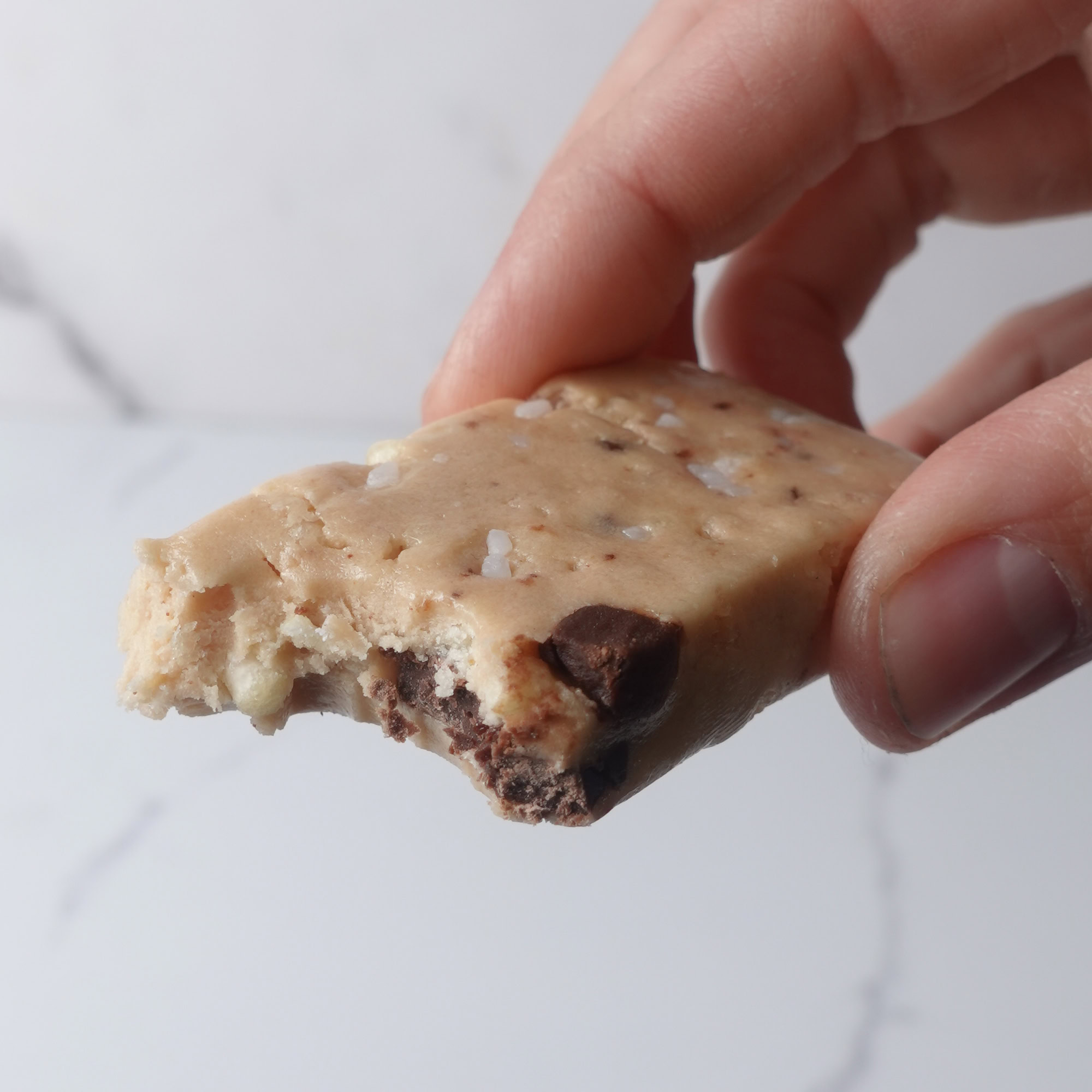
For what it’s worth, these bars were first formulated with Stevia, but they reformulated with cheaper sugar substitutes (claiming it was for improved texture), and the flavor suffers because of it.
The whey crisps throughout these bars taste like stale rice crispies and honestly just throw me off. I wish they would just keep it soft throughout to eat like an actual cookie dough bar.
David Bars: Chocolate Review
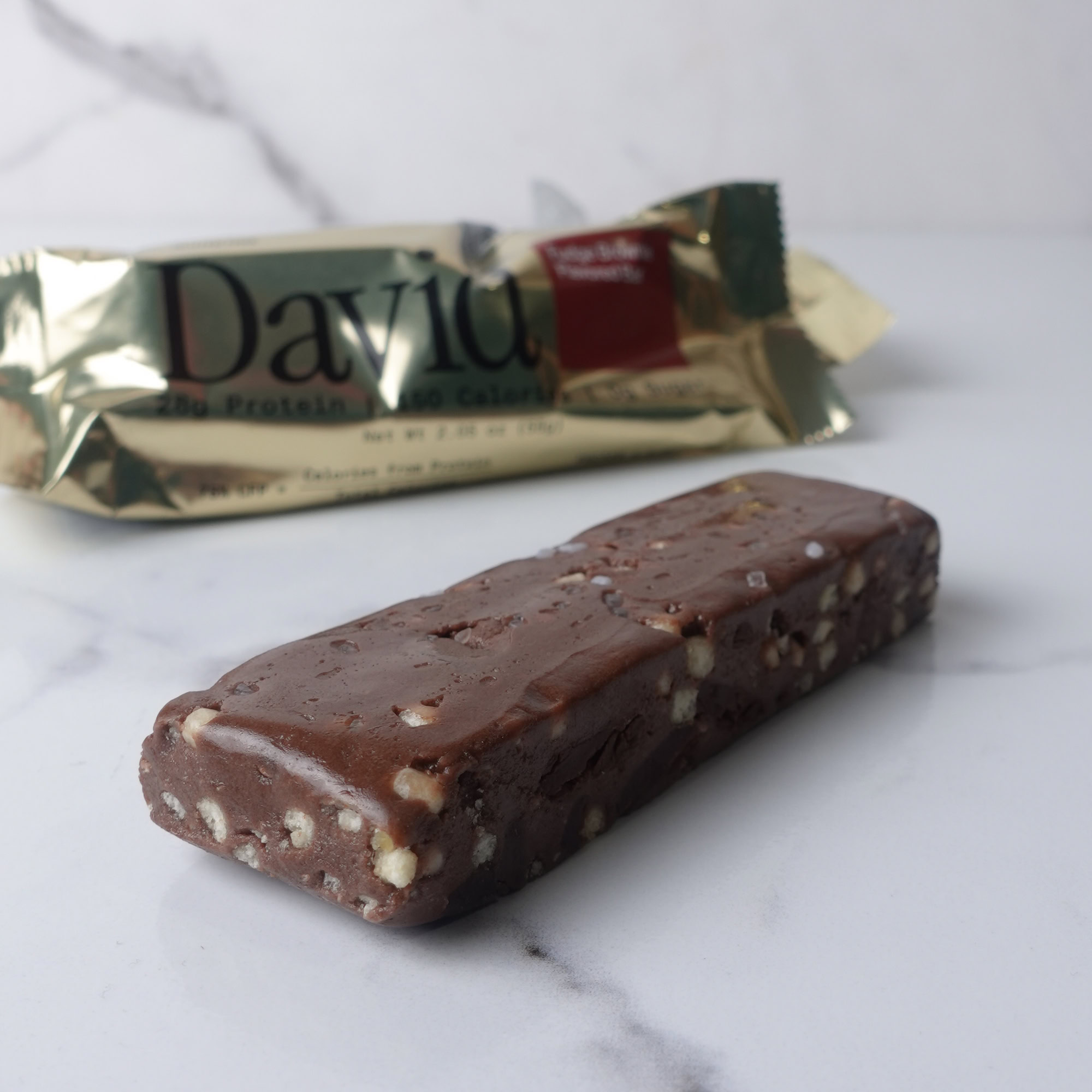
The chocolate version has the same texture issues as the cookie dough, but the flavor is even more disappointing.

This tastes exactly like chocolate protein powder. There’s no rich chocolate flavor, no depth, just that artificial chocolate protein taste that screams “supplement” rather than “treat.”
Again, the EPG helps with texture, making it softer and less chewy than traditional protein bars. But when the flavor is this artificial, texture can only do so much.
For $4 per bar, I expect way better than something that tastes like I made it at home with a scoop of protein powder.
The David Bars Reality Check

Here’s what I think is happening with David Bars: they taste better because of the macros.
When you know you’re eating a 150-calorie bar with 28 grams of protein, you’re willing to overlook the artificial flavor and convince yourself it’s better than it actually is.
But David Bars are fine. That’s about the best I can say about them.
The macros are legitimately impressive, and the EPG creates a decent texture that’s better than most low-calorie protein bars. But the flavor is very much “protein powder in bar form,” and at $4 per bar, you’re paying ultra-premium prices for average taste.
I’ll give them credit for going viral and creating something the industry hasn’t seen before. But there were companies making better-tasting products with this same ingredient for years.
David just had better marketing and the venture capital to buy out the ingredient supplier and eliminate their competition.
The federal lawsuit will determine if that was legal or not, but regardless, it leaves a bad taste in my mouth for more reasons than just the artificial flavors.
If you want to try the viral bar everyone’s talking about, go ahead and grab one. Just don’t expect it to live up to the hype, and definitely don’t make it a regular purchase at that price point.
There are way better protein bars out there for half the cost.